
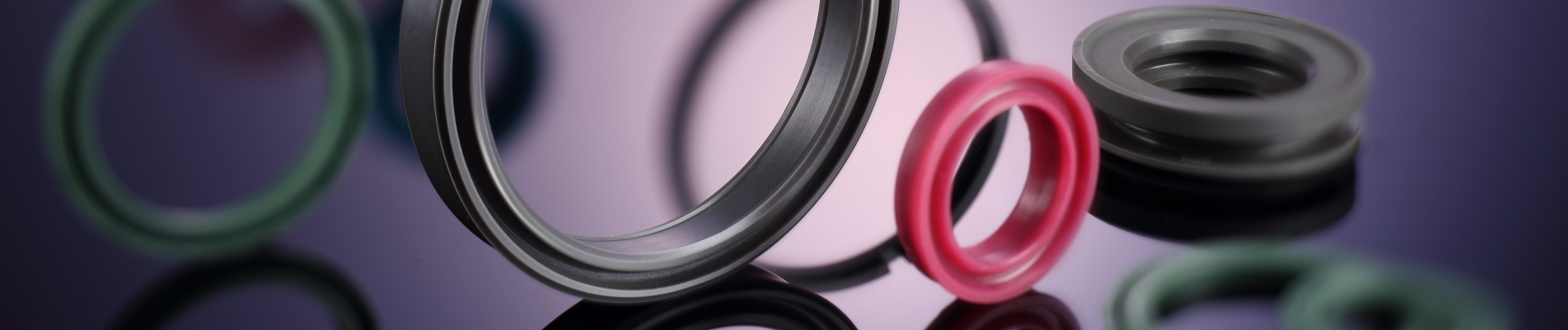
are specially engineered sealing components used in hydraulic cylinders and hydraulic equipment to prevent fluid leakage, maintain pressure, exclude contaminants, and ensure efficient system performance.
How Does a Hydraulic Seal Work?
Hydraulic seals operate by creating a controlled sealing interface between two surfaces.
When hydraulic pressure builds inside the system, the pressure pushes the seal against the mating surface, increasing the sealing force. This pressure-assisted design helps prevent hydraulic fluid from escaping while allowing moving components such as piston rods or pistons to travel smoothly.
At the same time, many hydraulic seals are designed to scrape away dirt and contaminants, preventing abrasive particles from entering the hydraulic system.
A properly designed seal balances:
Different hydraulic applications require different sealing solutions. Each seal type performs a specific function within the hydraulic cylinder.
Rod Seals
Rod seals are installed in the cylinder head and prevent hydraulic fluid from leaking along the piston rod during operation.
As one of the most critical sealing elements in hydraulic cylinders, rod seals must withstand high pressure while maintaining low friction and long wear life.
Piston Seals
Piston seals separate the pressure chambers inside hydraulic cylinders.
They ensure that hydraulic pressure acts efficiently on the piston, enabling smooth linear motion and preventing internal leakage.
Piston seals are available in both single-acting and double-acting designs, depending on the cylinder configuration.
Wiper Seals
Wiper seals, also known as scraper seals or dust seals, remove dirt, moisture, and debris from the piston rod before contaminants enter the hydraulic cylinder.
Although they do not retain hydraulic pressure directly, wiper seals play a crucial role in extending seal life and reducing wear.
Without an effective wiper seal, abrasive particles can rapidly damage internal sealing components.
Guide Rings
Guide rings support the piston and rod while preventing metal-to-metal contact.
Although they do not provide sealing themselves, they improve stability and reduce wear.
O-Rings
O-rings are among the most widely used sealing components in hydraulic systems.
They are primarily used for static sealing applications but can also serve as energizing elements in combination seals.
O-rings offer excellent sealing performance while remaining economical and easy to install.
Rotary Seals
Rotary seals are designed for rotating shafts rather than reciprocating movement.
They are commonly used in hydraulic motors, pumps, gearboxes, and rotary actuators where reliable sealing under rotational motion is required.
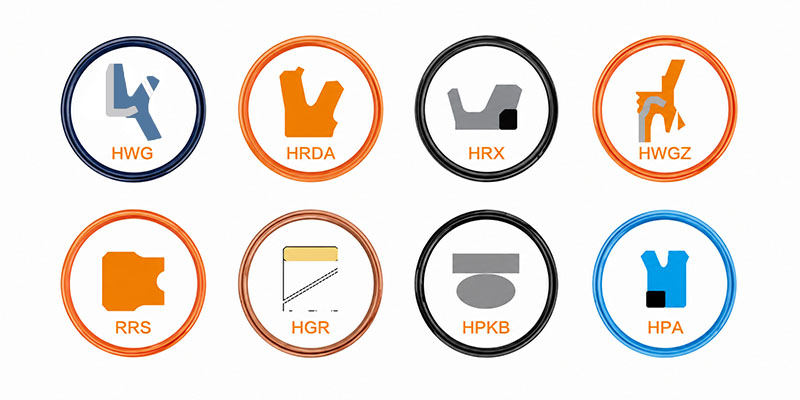
Selecting the right sealing material is just as important as choosing the correct seal design.
Polyurethane (PU)
Polyurethane offers excellent abrasion resistance, high elasticity, and outstanding wear performance, making it one of the most widely used materials for hydraulic seals.
PTFE
PTFE provides extremely low friction and excellent chemical resistance.
It is suitable for high-speed and high-temperature applications.
Nitrile Rubber (NBR)
NBR (Nitrile Rubber) offers excellent resistance to petroleum-based hydraulic oils and is commonly used for O-rings and static seals.
Fluorocarbon Rubber (FKM)
FKM provides outstanding resistance to high temperatures, aggressive chemicals, and aging.
It is often selected for demanding industrial environments.
Engineering Plastics
Materials such as PEEK, POM, and reinforced composites are widely used for guide rings, backup rings, and high-pressure sealing elements due to their exceptional mechanical strength and dimensional stability.
Hydraulic seals are used across a wide range of industries.
Common applications include:
Each application requires different sealing materials and profiles depending on pressure, temperature, speed, and environmental conditions.
Hydraulic seals are essential components that ensure the reliable operation of hydraulic systems by preventing fluid leakage, maintaining pressure, and protecting equipment from contamination. Choosing the right hydraulic seal requires careful consideration of factors such as application conditions, operating pressure, temperature, and material compatibility.
Whether you are designing hydraulic equipment, maintaining machinery, or sourcing sealing components, selecting a reliable sealing solution can significantly improve equipment performance and service life.
Leave A Message
Scan to wechat :